Monday, November 2

Science & Technology

The Catastrophic Real Estate Model That Doubled Mexico’s Urban Sprawl Without Transport or Services
Science & Technology

The Catastrophic Real Estate Model That Doubled Mexico’s Urban Sprawl Without Transport or Services

Urban Expansion in Mexico: A Growing Challenge Over the past three decades, Mexican cities have experienced significant growth, resulting in housing developments increasingly situated further from urban centres. This expansion has led to greater distances between residents and essential locations such as workplaces, schools, hospitals, and various services. In many areas, this growth occurred before adequate public transportation options were available, creating a scenario where travelling longer distances has become an everyday reality, making it increasingly difficult for individuals to forgo the use of automobiles. A recent study published in Nature Communications sheds light on this significant urban transformation. Researchers from the Tecnológico de Monterrey, in collaboration with t...
Reheating Your Food: Why It Doesn’t Make It Safer
Science & Technology

Reheating Your Food: Why It Doesn’t Make It Safer

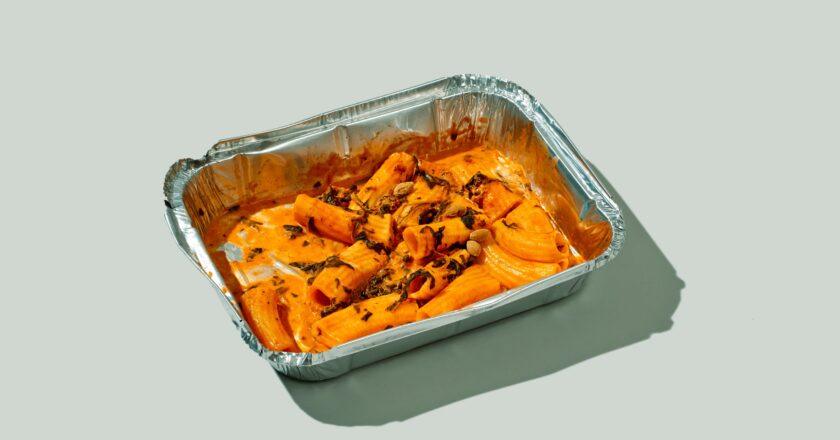
The Dilemma of Leftovers There's a distinct pleasure in knowing a meal awaits you in the fridge when hunger strikes. However, the challenge of consuming those leftovers before they spoil can feel like a race against time. Foodborne illness is a serious matter, which explains why a sauce that’s just a few days old might seem more off-putting than appetising. Yet, the hungrier you are, the more tempting it becomes to ignore the clock, particularly when some sources claim that reheating food can extend its shelf life by an additional three to four days. This theory posits that warming food before harmful microorganisms have a chance to develop could delay their emergence. However, food safety experts suggest that this notion is largely misleading. Understanding the Risks of Leftovers Foodborn...
The Milky Way’s Formation: Unveiling the Ancient Collision That Shaped Our Galaxy
Science & Technology

The Milky Way’s Formation: Unveiling the Ancient Collision That Shaped Our Galaxy

Hubble Discovers the Earliest Known Passage in Galactic History The Hubble Space Telescope has recently unveiled the most ancient passage known in the history of the Milky Way. A dedicated team of astronomers has identified a collection of stars that once belonged to a substantial galaxy, which merged with the proto-Milky Way approximately 12 billion years ago. This discovery represents the earliest evidence of a significant merger identified to date, extending the known timeline of major galactic collisions by 1.8 billion years, to a point when less than 2 billion years had passed since the Big Bang. Reconstructing the Milky Way's Family Tree The prevailing model of galaxy evolution suggests a hierarchical growth pattern. This implies that the earliest galactic structures were relatively ...
Meet “Superman”: The Chinese Robot That Can Leap 2 Metres and Outrun Usain Bolt
Science & Technology

Meet “Superman”: The Chinese Robot That Can Leap 2 Metres and Outrun Usain Bolt

Unitree Unveils the "Superman" Robot While it may not yet have the capability to leap tall buildings in a single bound or outrun a speeding bullet, Unitree Robotics has nonetheless chosen to name its latest creation "Superman". This humanoid robot has captured global attention, showcasing impressive physical abilities that have gone viral recently. One might ponder whether a name like Astro Boy or Optimus Prime would have been more fitting for a robot boasting such extraordinary skills. Unitree's newest prototype is a remarkable feat of engineering, having been developed in just three months. It boasts the ability to jump over two metres effortlessly and run at an astonishing speed of 12.658 metres per second, surpassing the world record set by Olympic athlete Usain Bolt, who clocked in at...
Can a Smart Hybrid Operating Room Enhance Healthcare? A Mexican Public Hospital Tests the Concept
Science & Technology

Can a Smart Hybrid Operating Room Enhance Healthcare? A Mexican Public Hospital Tests the Concept

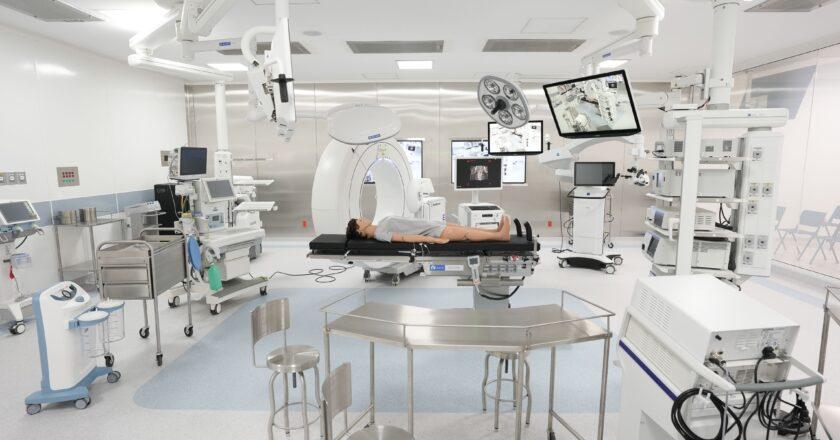
Revolutionising Complex Surgery in Mexico’s Public Health System The introduction of a state-of-the-art hybrid operating theatre in Mexico aims to redefine the landscape of complex surgical procedures within the public health system. This facility is equipped with real-time imaging systems, advanced assistance technology, a platform for minimally invasive operations, and capabilities for remote medical training. The overarching goal is to enhance the precision and efficiency of surgical interventions, reduce operation times, and shorten hospital stays. However, questions remain regarding the evidence supporting this model's efficacy and its potential contributions to a high-demand public emergency service. Few scenarios demand as much speed and accuracy as a surgical emergency. This is a d...
Is It Really Possible to Boost Your Metabolism?
Science & Technology

Is It Really Possible to Boost Your Metabolism?

Understanding Metabolism Metabolism is a topic that captivates many, yet it is often shrouded in misunderstanding. The desire to "boost" or "speed up" one's metabolism is common, with the hope of burning more calories and losing body fat. However, achieving this is not as straightforward as social media might suggest. Numerous viral TikTok videos promote simple solutions such as consuming apple cider vinegar, utilising infrared saunas, or trying cold baths. In reality, many of these purported tricks lack substantial scientific backing, and those that do often yield negligible results in terms of weight management. At its core, metabolism refers to the body's process of converting food into energy. This energy fuels vital functions, including the operation of the heart and lungs, tissue rep...
El Niño and Saharan Dust: How They Influence Atlantic Hurricanes and Boost Pacific Storms
Science & Technology

El Niño and Saharan Dust: How They Influence Atlantic Hurricanes and Boost Pacific Storms

El Niño y su Impacto en la Temporada de Huracanes La Temporada de Huracanes y sus Desafíos As we find ourselves in the midst of the Atlantic hurricane season, it is easy to overlook the fact that only three named storms have emerged since the season began in June. These storms have been relatively weak and largely disorganised, leading to speculation that the season may yield just a handful more tropical storms as it confronts several unfavourable conditions. El Niño: Un Fenómeno que Marca la Diferencia One of these unfavourable conditions is this year's El Niño, which is poised to be historically significant. This phenomenon has led to unprecedented sea surface temperature rises in a crucial section of the Pacific Ocean. Additionally, persistent dry and dusty air from the African coast ...
Vaccination Shields Your Brain Against Dementia: The Mystery Unveiled
Science & Technology

Vaccination Shields Your Brain Against Dementia: The Mystery Unveiled

Emerging Connections Between Vaccination and Cognitive Health Recent studies have revealed an intriguing link between routine vaccinations and a reduced risk of dementia. Among the vaccines showing this association are those for seasonal influenza, respiratory syncytial virus (RSV), tetanus, diphtheria, pertussis, pneumococcal infections, hepatitis A and B, and typhoid fever. Notably, the strongest connection has been observed with the shingles vaccine, with accumulating data further supporting this relationship. As the evidence mounts, researchers are delving into an unexpected question: How can vaccines targeting specific pathogens also serve to protect the brain from cognitive decline? An emerging hypothesis suggests that vaccines might be safeguarding our brains by training a part of t...
Unveiling the Experimental “Traps” Designed to Capture Elusive Neutrinos
Science & Technology

Unveiling the Experimental “Traps” Designed to Capture Elusive Neutrinos

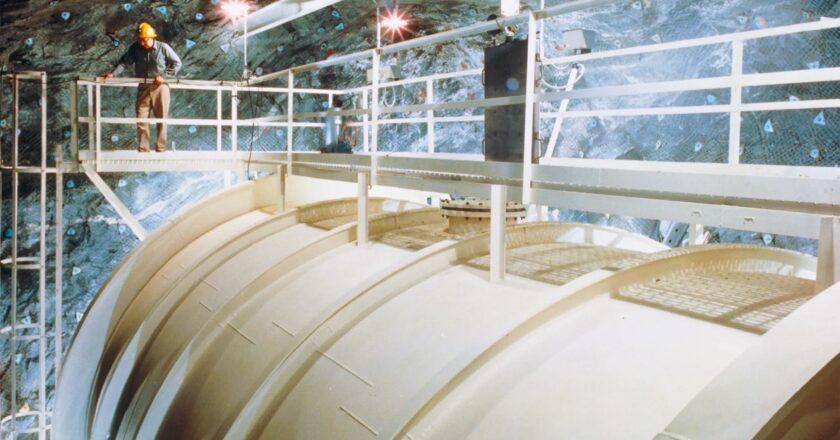
A Historic Journey into Neutrino Detection Seventy years ago, physicists Clyde Cowan and Frederick Reines embarked on a groundbreaking experiment, constructing a custom-made 10-ton detector encased in thick lead walls and damp sandbags. They positioned it near a powerful nuclear reactor at the Savannah River Plant in South Carolina, dubbing the project "Poltergeist" in a nod to its aim of capturing a ghostly particle. More than twenty-five years prior, scientists were perplexed by the apparent loss of energy during a radioactive process known as beta decay. In 1930, Austrian physicist Wolfgang Pauli proposed a radical hypothesis: an almost undetectable particle was silently carrying away the missing energy. Pauli confessed to a colleague, "I have done something terrible. I have postulated ...